

We have 8 sensory systems. There are the big 5 that most people know – touch, taste, smell, sound and sight – and then there are the little known but often most important additional 3 -interoception, proprioception and vestibular systems. Together they interpret, make sense of and respond to sensory input from the environment and one’s own body.
A regulated nervous system means we are not in a fight, flight or freeze response, and allows for more complex thoughts, learning and engagement.
Each person will have their own unique sensory profile; this means the way they respond to input.
Some people are more sensitive while others less receptive to certain sensory input. Variations between individuals are expected and normal. However, for some, these differences can become difficulties when they impact their ability to engage in daily tasks or function. This is where OT’s can step and come to the rescue.
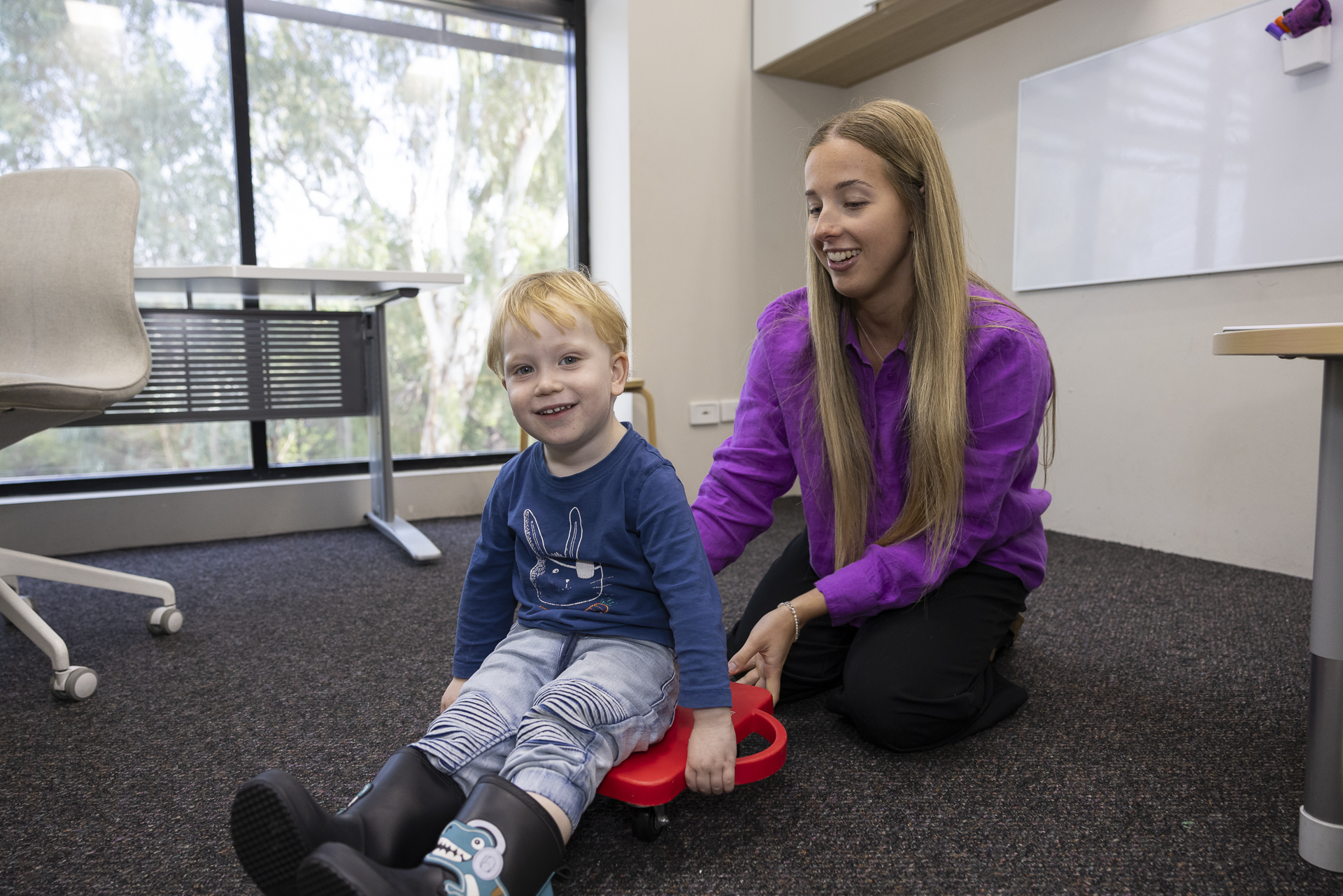
Whether it is difficulty managing sudden loud noises, fear of the hairdresser or seeking movement to the point that it puts the little one’s safety at risk, our OT’s are ready and eager to provide tailored assessment, therapy plans and intervention to support the child and their support network to build coping skills, reduce impact and distress, and increase tolerance.
Our therapists work across our three Perth clinics in Shenton Park, Success and Baldivis, making sensory processing therapy accessible for families across the metro area.